Can You Bring an Electric Razor on a Plane?
Yes, you can generally bring an electric razor on a plane in carry-on or checked baggage. Switch it off, protect it from accidental activation, and keep spare lithium batteries in your carry-on with their terminals protected.
On this page (8 sections)
- Can you bring an electric razor on a plane in carry-on luggage?
- Can an electric razor go in checked baggage?
- Can you bring shaving cream with an electric razor?
- Which electric shavers make sense for travel?
- How do you choose between runtime, size, and charging?
- How should you prepare and use a shaver during a trip?
- What packing mistakes should you avoid?
- What should you choose before bringing an electric razor on a plane?
Yes, you can generally bring an electric razor on a plane in carry-on or checked baggage. Switch it off, protect the head, and keep spare lithium batteries in your carry-on with their terminals protected.
For most trips, your usual shaver is enough. Buy a travel model if it solves a clear problem, such as limited bag space, an awkward charger, or the need for quick grooming between stops.
Can you bring an electric razor on a plane in carry-on luggage?
An electric razor is generally allowed in carry-on luggage, making your cabin bag a practical place to pack it. Cover the cutting head and keep other items from pressing the power control.
The Transportation Security Administration permits electric razors in carry-on bags. Its electric razor guidance covers U.S. screening; check the departure airport's security authority for other countries.
Keep the shaver accessible enough to remove if security staff ask to inspect it. A cap protects the shaving surface, while a pouch keeps loose parts and cords together.
Can you bring an electric razor with a removable battery?
You can generally bring an electric razor with its battery installed, subject to airline limits. A loose spare lithium battery needs separate protection and belongs in your carry-on.
Cover exposed terminals or place each spare in its own protective case. Don't let batteries touch keys, coins, or other metal objects.
The FAA's PackSafe guidance for portable electronic devices explains battery packing requirements. Check with your airline if you can't identify the battery type or capacity.
Don't bring a damaged or swollen battery on a flight. Resolve any battery safety recall through the manufacturer's guidance before traveling with the affected device.
Can an electric razor go in checked baggage?
An electric razor can generally go in checked baggage, but fully switch it off and protect it from damage and accidental activation. Spare lithium batteries and power banks must stay in the cabin.
A soft toiletry bag alone may not stop a packed shoe or bottle from pressing the controls. Use a protective case or place the covered shaver where surrounding items won't crush it.
If your carry-on gets checked at the gate, remove spare lithium batteries and power banks before handing it over. Check the airline's policy for the shaver itself, especially if its battery details are unclear.
Can you bring shaving cream with an electric razor?
Yes, shaving cream can generally travel with your razor, but liquid and aerosol limits apply. For U.S. carry-on screening, containers generally must hold no more than 3.4 ounces (100 milliliters) and fit in a quart-size liquids bag.
The container's capacity matters, so a nearly empty large can doesn't meet that carry-on size limit. Larger containers may go in checked baggage within applicable limits; keep aerosol release buttons capped.
A dry shave saves space in your liquids bag if your skin tolerates it. If you prefer foam or gel, choose a suitable shaver and read what wet and dry means for electric shavers before using shaving products.
Which electric shavers make sense for travel?
Choose a travel shaver by shaving style, charging needs, and bag space. The best fit is one you can use comfortably and keep charged throughout your trip.
A smaller device isn't automatically a better choice if you dislike its grip or cutting system. Our electric shavers for men buying guide explains the main designs before you commit.
Panasonic Travel Foil Shaver: for light packing
The Panasonic Travel Foil Shaver suits travelers who want a palm-sized device and USB-C charging. Its secure cover protects the head when you tuck it into a backpack or toiletry pouch.
It offers 60 minutes of battery life, wet and dry use, and a beard sensor that adjusts power to hair thickness. The compact shape makes sense for daily face shaving and quick touch-ups when a full-length handle takes up too much room.
Choose it if reducing charger clutter matters and USB-C fits your travel kit. Check your packing list rather than assuming every USB-C device comes with the cable and power source you need.
Skip it if a built-in detail trimmer is essential, since none is specified here. Also consider whether you prefer holding a palm shaver or a longer handle for slow work around your jaw and neck.
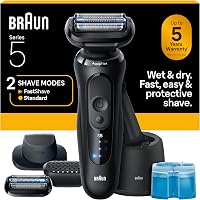
Braun Series 3 3010s: for a familiar foil routine
The Braun Series 3 3010s suits travelers who prefer a conventional foil shaver and want an included charger with automatic voltage adjustment. Its narrow head helps you reach areas such as under the nose.
Twin foils work beside a middle trimmer that catches difficult hairs. That middle cutting element isn't a separate detail trimmer for shaping sideburn edges, so don't confuse the two.
The rechargeable NiMH batteries provide 30 minutes of shaving after a 1-hour charge. A 5-minute quick charge supplies enough power for one shave, which helps if you discover a low battery before leaving the hotel.
Choose it if you value that charging fallback and already like foil shaving. Skip it if carrying a separate shaver charger defeats your packing goal; you may also need a plug adapter for the destination's socket shape.
Philips Norelco 2400: for rotary users who trim edges
The Philips Norelco 2400 suits travelers who prefer rotary shaving and want a pop-up trimmer for mustache or sideburn edges. Its floating heads move in 4 directions to follow facial curves.
It supports wet and dry shaving and provides 40 minutes of use from a 1-hour charge. A 5-minute quick charge provides enough power for one shave.
Choose it if your travel charger has a suitable USB-A port and you want one tool for face shaving and edge work. The power adapter isn't included, so plan the complete charging setup before departure.
Skip it if your bag contains only USB-C power sources and you want no extra charging pieces. If you're used to straight foil strokes, compare foil and rotary shavers before changing systems just for a trip.
How do you choose between runtime, size, and charging?
Choose enough runtime for your routine, then check the entire charging setup. Estimate your shaving minutes per day and leave a margin for extra passes or an unexpected delay.
For a short trip, charging before departure may cover your needs. On a longer trip, the cable and power source matter more than a small difference in advertised runtime.
Check these details before buying:
- Port type: A USB-A cable won't plug directly into a USB-C-only charging port.
- Wall power: Confirm the power adapter's input voltage before using it abroad.
- Outlet shape: A plug adapter changes the physical fit; it doesn't convert voltage.
- Grip and head protection: Choose a shape you can hold securely and a cover that stays in place.
Don't buy solely because a model looks small in a photo. Consider the space needed for its charger, cap, and any separate trimming tool.
How should you prepare and use a shaver during a trip?
Charge, clean, and dry the shaver before packing, then use a routine your skin already handles well. A travel morning is a poor time to learn a new cutting system or press harder for extra closeness.
Check the foil or rotary guards for visible damage before departure. A damaged shaving surface needs attention before it touches your skin.
For dry shaving, start with clean, dry skin and use light pressure. Foil shavers generally suit short, straight strokes, while rotary models generally suit small circular movements.
If you shave wet, follow the shaver's instructions for water, foam, or gel use. Our guide to how to use an electric shaver covers technique without relying on repeated passes over the same spot.
Clean out hair after use and let rinsed parts dry before closing the cap or pouch. See how to clean an electric razor for a fuller care routine.
What packing mistakes should you avoid?
Avoid unprotected heads, damp storage, and incomplete charging kits. These are easy problems to prevent before the bag closes.
Don't leave the cutting surface loose against cables or other toiletries. A bent foil or damaged guard can make the shaver unsuitable to use, even when the motor still runs.
Don't assume a protective cap also locks the power control. Check whether your shaver has a travel lock, and use it according to its instructions if available.
Keep the charger dry and don't seal a freshly rinsed shaver in a closed pouch. Pack enough time into your last morning to let the head dry before leaving.
What should you choose before bringing an electric razor on a plane?
When bringing an electric razor on a plane, choose the model that fits your shaving routine and charging kit. Keep your current shaver if it already packs safely and covers the trip without extra hassle.
Pick the Panasonic for light packing, the Braun for a conventional foil routine with its included Smart Plug, or the Philips Norelco for rotary shaving and built-in edge trimming. Each solves a different travel need.
Before departure, check your route's security and battery rules, charge the shaver, and fit its cover. If you're still choosing a cutting system, use our electric shaver guide to settle that decision before buying.
Frequently asked questions
Can you bring an electric razor in carry-on luggage?
Yes, electric razors are generally allowed in carry-on luggage. Switch yours off, cover the shaving head, and prevent the controls from being pressed inside the bag.
Keep spare lithium batteries and power banks in the cabin, protect exposed terminals, and check battery rules for your airline and route.
Can you pack an electric razor in checked luggage?
Yes, an electric razor can generally go in checked luggage, subject to its battery and your airline's rules. Fully switch it off and protect it from damage and accidental activation.
Spare lithium batteries and power banks belong in carry-on baggage, including when your cabin bag is checked at the gate.
Do electric razors count as dangerous goods on a plane?
A typical rechargeable electric razor is generally allowed on a plane, though battery transport rules still apply. An installed battery and a loose spare may have different packing requirements.
Check your airline's guidance if the battery type or capacity is unclear, and don't travel with a damaged or swollen battery.
Can you bring shaving cream with an electric razor?
Yes, you can generally bring shaving cream, but liquid and aerosol limits apply. For U.S. carry-on screening, containers must generally hold no more than 3.4 ounces (100 milliliters) and fit in a quart-size liquids bag.
Check separate size and quantity limits before packing larger containers in checked baggage.