Electric Shavers for Men: The Complete Buying Guide
Choose an electric shaver for men by matching head style to your shaving routine: foil for controlled straight strokes, rotary for small circles around contours. Then compare beard-length support, trimming tools, cleaning and charging.
On this page (11 sections)
- Which electric shaver style should you choose?
- What should you look for in an electric shaver for men?
- Which electric shaver fits your routine?
- How should you compare battery and charging needs?
- How should you set up and use a new electric shaver?
- What does cleaning and maintenance involve?
- How do you choose a shaver for a close shave?
- Which common mistakes make electric shaving harder?
- What should you check before buying?
- Which electric shaver for men should you choose?
- How we researched this guide
Choose an electric shaver for men by matching its head style to your routine, then checking beard-length support, trimming tools and care needs. Foil suits controlled straight strokes; rotary suits small circles around facial contours.
For the models here, choose the Norelco 3900 for a straightforward rotary routine or the Norelco 7800 for motion guidance. Choose the Braun Series 5 for its grooming attachments or the Panasonic ARC5 for a five-blade foil setup.
The right choice should make your usual shave easier, including the cleanup afterward. For a wider shortlist, browse our best electric shavers guide.
Which electric shaver style should you choose?
Choose a foil shaver for straight, controlled passes, or a rotary shaver for small circular movements. Head shape and technique matter more than choosing a style because it has more blades.
| Shaver style | A good fit if you | Main adjustment |
|---|---|---|
| Foil | Prefer straight strokes and controlled work near beard edges | Change the head angle around the chin and jaw |
| Rotary | Prefer circular movements over the cheeks, jaw and neck | Work in small circles without pushing the heads into skin |
| Either | Want a clean-shaven face with regular upkeep | Keep growth manageable and the cutting head clean |
A foil shaver has a thin, perforated screen over moving cutters. Hair enters the openings while the screen separates the cutting blades from your skin.
Its shape makes it easy to follow a deliberate path across a cheek or approach a sideburn. Around tight curves, use smaller movements so the head stays in useful contact.
Learn more in how a foil shaver works.
A rotary shaver uses round heads with cutters beneath their covers. Small circles let you approach hair from changing directions without making one long sweep across the face.
That movement can suit a neck where growth changes direction, but the handle still needs a light touch. Read what a rotary shaver is and who it suits.
If you're switching styles, expect to change your strokes as well as your shaver. Our foil vs rotary shaver guide explains the differences in more detail.
What should you look for in an electric shaver for men?
Choose features that solve a task you do regularly: shaving short growth, reaching the neck, outlining facial hair or cleaning quickly. Start with your routine before comparing blade counts and motor figures.
Which electric shaver for men suits your beard growth?
Choose around your normal gap between shaves, including the days when you skip your routine. Someone shaving every morning has different needs from someone removing several days of growth.
Short stubble is generally easier for a finishing shaver to handle than longer, flat-lying hair. If you often grow a longer beard, plan to shorten it with a suitable trimmer before shaving close.
Among these options, Braun describes the Series 5 as suitable for a 3-day beard, and Philips Norelco describes the 7800 for that length too. That makes them useful starting points for an every-few-days routine.
Neither description makes a face shaver a substitute for a beard trimmer at every length. A detail trimmer is useful for edges, but may be awkward for shortening a whole beard.
Look at growth direction as well as length. If the hair beneath your chin points sideways, a pass straight down your neck may leave it behind.
For persistent patches, read why an electric shaver may leave stubble before assuming you need a different machine.
Which features help with skin comfort?
Favor light contact, manageable growth and clean cutters before adding more features. Flexible heads and skin-contact coatings can support the shave, but they don't replace good technique.
A pivoting head can help follow a curve while you change the handle angle. It still needs room to move, so avoid gripping the handle rigidly and forcing the head flat.
If your neck becomes sore before it looks smooth, reduce repeat passes over that area. Chasing every trace of roughness can turn a reasonable shave into an uncomfortable one.
Foam or gel may suit your routine, but use only products allowed by the shaver's instructions. A thick layer can make it harder to see the area you're working on and adds residue to clean away.
For more choices based on comfort needs, see our electric shavers for sensitive skin guide.
Is wet or dry shaving a better fit?
Choose dry shaving for fewer preparation steps, or wet shaving if you prefer lather and already shave near the shower. All 4 models below support wet and dry use.
For a dry shave, start with dry skin and beard hair. Moisture left after washing can make the head drag and hair cling to the skin.
For a wet shave, use a modest amount of compatible foam or gel and rinse as directed when residue builds up. More lather doesn't mean the shaver can handle longer hair.
Waterproof use, rinsing and charging are separate questions. See what waterproof means for an electric shaver before deciding where to use and store it.
Which trimming tools will you use?
Choose a pop-up trimmer for quick edge work, or attachments if you want separate tools for more grooming tasks. Check the included set rather than assuming every version of a shaver has the same accessories.
A pop-up tool is convenient for a stray mustache hair or a sideburn edge because it stays attached. A separate precision attachment adds a swapping step but gives you another dedicated grooming tool.
Body grooming needs an attachment intended for that job. Don't assume a facial detail trimmer is suitable for every area below the neck.
If you wear a full beard most days, a dedicated beard trimmer may deserve priority over a close-shaving system. Buy the shaver for the parts of your face you actually keep bare.
Which electric shaver fits your routine?
Choose the Norelco models for rotary shaving and the Braun or Panasonic for foil shaving, then narrow the choice by accessories and guidance. These examples serve different routines rather than forming a single ranking.
Philips Norelco 3900: for a straightforward rotary routine
Choose the Norelco 3900 if you want rotary shaving, basic edge cleanup and a simple charging spot at home. It's the direct fit here for someone who doesn't need motion coaching or separate grooming attachments.
Its 5-directional pivoting head follows face and neck curves. Rounded ComfortCut caps cover the cutters, and Philips Norelco describes the system as cutting hair just above skin level.
The practical appeal is a single tool for your regular face shave and small finishing jobs. The built-in trimmer lets you tidy sideburns without changing attachments.
Battery life is up to 60 minutes from a 1-hour charge. The set includes a protective cap, travel pouch, charging stand and USB-A cable, but you'll need a compatible power adapter.
Choose it if your routine is mostly short facial growth and occasional edge work. The stand also suits someone who prefers to return the shaver to one place after use.
Skip it if you specifically want a foil head, body-grooming attachment or guidance on your shaving motion. Those needs point more clearly toward other options in this guide.
Braun Series 5 5155cs: for face shaving and body grooming
Choose the Braun Series 5 5155cs if you prefer foil strokes and will use its precision trimmer and body groomer. Its accessory set is the main reason to choose it over a face-only routine.
The shaving head uses 3 AquaFlex blades, with SkinGentle Foil and a SmoothShave blade. Braun describes the system as reducing tug and pull, including on a 3-day beard.
SmartMotor adjusts power to beard density, while Standard and FastShave modes let you select the shaving mode. Start with controlled strokes rather than treating the faster mode as permission to rush awkward areas.
EasyClean allows rinsing without removing the shaving head. That's useful if complicated head removal would make you put off routine cleaning.
The set includes a charging stand and travel case, with up to 50 minutes of cordless runtime. Keep the attachments organized so the tool you need is ready when you switch tasks.
Skip this set if you want rotary motion or know the extra attachments will stay unused. For a closer look at the range, read our Braun Series 5 review.
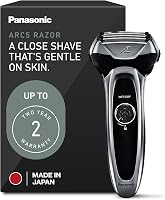
Panasonic ARC5: for a five-blade foil routine
Choose the Panasonic ARC5 if you want a five-blade foil system, a built-in detail trimmer and a clear battery display. It suits someone focused on regular face shaving rather than a set of body-grooming attachments.
The ARC5 combines 30-degree blades, a flexible pivoting head and a sensor that adjusts power to beard density. Its linear motor delivers 14,000 cuts per minute, which Panasonic also expresses as 70,000 crosscutting actions per minute.
Those figures describe the cutting system; they aren't a shared speed scale for comparing every brand. Choose it because the foil format and features fit your routine, rather than because one number looks largest.
The 10-stage LCD battery indicator helps you judge when to recharge. Charging takes 1 hour, and the included AC recharger supports 100–240V.
A travel pouch is included, and the voltage range is useful when planning international travel. You'll still need a plug adapter where the outlet shape differs.
Skip it if body grooming is a main goal or you prefer circular shaving movements. Read our Panasonic ARC5 review if you're narrowing your choice to this model.
Philips Norelco 7800: for rotary shaving with motion guidance
Choose the Norelco 7800 if you want a rotary shaver that also guides your shaving motion. It's the more relevant choice here for someone who wants help reducing unproductive passes.
Its heads turn 360 degrees, and its facial-hair sensor adjusts power to beard density. Motion-sensing technology tracks how you shave and provides guidance on technique.
Philips Norelco says the Nano SkinGlide coating improves glide on skin. The SteelPrecision system has 45 self-sharpening blades and delivers up to 90,000 cutting actions per minute.
The useful distinction is the combination of contour movement, power adjustment and motion guidance. That suits a buyer interested in refining a rotary routine, including shaving a 3-day beard.
A full charge takes 1 hour, and Philips Norelco says a 5-minute charge provides enough power for 1 shave. A wall adapter isn't included, so account for that when planning your charging spot.
Skip it if you want foil strokes or won't use the guidance features. The 3900 is the simpler rotary choice when your main needs are face shaving and basic edge work.
How should you compare battery and charging needs?
Choose charging around your longest realistic gap between outlets, rather than the largest runtime alone. A home shaver and a shaver packed for several days away need different charging plans.
Estimate the minutes you spend per shave, then allow some margin for extra passes and trimming. Advertised runtime is a useful planning figure, not a promise of a fixed number of shaves.
A stand helps if you have a dry, stable place to leave it. If you pack the shaver often, think about the cable, charger and attachments you must remember alongside the handle.
Check what is included before your first charge. A USB cable, charging stand and wall adapter are different parts, and one doesn't imply the others are supplied.
Don't assume a cordless model can shave while connected to power. Follow the model's instructions, especially for equipment used near water.
For travel, voltage support and plug shape are separate checks. Read whether you can bring an electric razor on a plane for packing advice.
How should you set up and use a new electric shaver?
Start with a full charge, an intact shaving head and manageable beard length. Learn one routine before changing pressure, lather and shaving direction all at once.
Prepare the head and your beard
Read the quick-start and care instructions before attaching accessories or rinsing the head. Check that the foil or rotary guards are seated correctly and have no visible damage.
If your beard has grown well beyond short stubble, shorten it with a suitable trimmer first. Repeatedly sweeping a finishing head over long hair can waste time and cause pulling.
For a dry shave, let your face dry fully after washing. For a wet shave, apply compatible shaving product as directed and keep the charging equipment away from the wet area.
Map the difficult areas
Notice which way the hair grows on your cheeks, under your chin and low on your neck. These areas may need different approaches even though they're part of the same shave.
Start with a light pass over a small area and adjust the direction if hair remains. Keep your wrist relaxed so you can change the handle angle without forcing the head into your skin.
Use your free hand to gently flatten a fold where needed. Avoid pulling so hard that you lose track of the natural contour.
Finish without chasing every rough patch
Pause and check the result before adding more passes. A mirror can show missed hairs that are hard to locate by sweeping your fingers across the whole face.
For a small missed patch, change the approach angle rather than pressing harder. If the area is already irritated, stop working it and revise your technique next time.
Use the detail trimmer for edges after the main shave, following its instructions. Our guide to using an electric shaver for a closer shave covers the technique step by step.
What does cleaning and maintenance involve?
Clean out hair and shaving residue after use, then let the head dry before storing it. A care routine you follow consistently matters more than buying features you won't maintain.
Clear the head without damaging it
Turn the shaver off and disconnect charging power before cleaning. Open or remove parts only as instructed for that model.
Use a brush only on parts approved for brushing. Thin foils are delicate, so don't scrape or press on their outer surface to remove trapped hair.
For a rotary head, keep matched cutters and guards together if the instructions call for individual removal. A quick rinse and a deeper clean may involve different steps.
Rinse away foam or gel before it dries inside the cutting assembly. For a practical sequence, read how to clean an electric razor.
Dry and lubricate as directed
Let cleaned parts air-dry before closing them in a pouch or case. Packing a damp head traps moisture along with any residue left behind.
Use lubricant only where and as directed by the brand. Don't improvise with household oils or cleaning liquids that aren't meant for the shaver.
Keep the charger and its connections dry. A washable shaving head doesn't make every accessory washable.
Replace worn or damaged cutting parts
Check the exact replacement-head code before buying a shaver, especially if several models have similar names. Being able to get the right part is more useful than a broad claim that replacements exist.
Replace damaged foils or guards promptly, and follow the brand's schedule for normal wear. Increased pulling after proper cleaning can also be a reason to inspect the cutting parts.
Our guide explains when to replace Braun and Norelco shaver heads.
How do you choose a shaver for a close shave?
Prioritize consistent head contact and suitable hair length, then refine your strokes. More pressure and a higher blade count aren't shortcuts to a better result.
A close shave comes from getting short hairs into the cutting openings without repeatedly scraping the same area. Head movement helps only when you hold the shaver at an angle that lets it work.
Motor and cutting-action figures use different descriptions across brands. Don't compare them as though every manufacturer measures speed in the same way.
Decide how much finish you need for daily life. A presentable morning shave and a face that feels smooth in every direction may require different amounts of time and touch-up.
For more models focused on this goal, see our best electric shavers for a close shave.
If you're switching from a manual razor, expect a different stroke and skin feel. Our electric shaver vs razor guide helps you compare the routines.
Which common mistakes make electric shaving harder?
Avoid heavy pressure, overgrown hair and rushed cleanup. These problems can make a suitable shaver feel like the wrong choice.
- Using long, fast sweeps: Work across small areas so you can keep contact and see where hair remains.
- Pressing harder at the jaw: Change the handle angle and stroke direction before adding pressure.
- Shaving damp skin without lather: For dry use, let the beard dry; for wet use, follow the model's directions.
- Expecting edge tools to trim a whole beard: Use a suitable beard trimmer when you need to remove substantial length.
- Changing everything at once: Keep the same preparation and technique long enough to identify what needs adjustment.
- Storing the head wet: Leave time for drying before closing the case.
- Replacing the whole shaver before checking the head: Clear debris, confirm assembly and inspect cutting parts first.
Don't use the shaving head over broken or already irritated skin. Work around the area and let it settle rather than adding repeated passes.
If one patch always remains, study its hair direction before buying another model. A change in approach may solve a problem that extra motor power won't address.
What should you check before buying?
Confirm head style, accessory needs and replacement-part fit before making your choice. Then check charging and care details that could disrupt your routine.
Use this short checklist to decide what matters most:
- Your normal shave: Daily short stubble, several days of growth or occasional full-beard removal.
- Your preferred movement: Controlled straight strokes or small circles.
- Your finishing jobs: Sideburns, mustache edges, beard outlines or body grooming.
- Your preparation: Dry shaving at the sink or a wet routine with compatible lather.
- Your charging spot: Available outlet, dry storage space and any missing adapter.
- Your care routine: Rinsing, deeper cleaning, drying and any required lubrication.
- Your replacement plan: Correct head code and access to compatible parts.
Think about ongoing supplies as well as the handle. Replacement cutters, approved care products and accessories belong in your ownership plan even when you don't need them immediately.
Compare brands through these practical needs in our electric shaver brands guide. For more alternatives, browse the best electric shavers for men.
Which electric shaver for men should you choose?
Choose your electric shaver for men by the job you'll repeat most often. Use this decision table to settle the final trade-off.
| Your main need | Choose | Choose another option if |
|---|---|---|
| Rotary face shaving with quick edge cleanup | Philips Norelco 3900 | You want motion guidance or body-grooming tools |
| Foil shaving plus separate grooming attachments | Braun Series 5 5155cs | You prefer rotary motion or won't use the attachments |
| Five-blade foil shaving with a detailed battery display | Panasonic ARC5 | Body grooming or rotary technique is your priority |
| Rotary shaving with guidance on your motion | Philips Norelco 7800 | You want a simpler routine without guidance features |
If you're replacing an uncomfortable shaver, identify the cause before moving to another style. Long growth, a worn head or repeated pressure needs a different fix from a head shape you can't use comfortably.
If you're buying your first shaver, settle on the movement you prefer and make sure the charging and cleaning routine fits your day. Then use our best electric shavers guide to compare other models only if these 4 leave a specific need unmet.
How we researched this guide
We compared head design, grooming tools, charging and care features against common shaving routines. Product recommendations reflect those differences, and comfort claims are attributed to the brands.
Blade counts and motor figures help describe the options, while the buying advice focuses on how each shaver fits your beard, technique and upkeep.
Frequently asked questions
Is a foil or rotary electric shaver better for men?
Choose foil if you prefer short, straight strokes and controlled work near beard edges. Choose rotary if small circular motions suit the way you shave around your jaw and neck.
Neither style suits every face, so consider your beard direction, shaving frequency and comfort with the required technique.
Can an electric shaver give a close shave?
An electric shaver can give a close shave when hair length, head contact and technique suit its cutting system. Start with light pressure and work across small areas in the recommended direction.
If hair remains, change your angle or shorten longer growth instead of repeatedly pressing over the same spot.
Should I choose a wet and dry electric shaver?
Choose wet and dry if you want to use foam or gel, or shave in the shower with a model approved for it. Choose your routine around convenience and skin comfort.
Wet shaving adds rinsing and drying steps, while dry shaving works best when your face and beard are dry.
How often should I replace electric shaver heads?
Follow the replacement schedule for your exact model, and replace damaged foils or guards promptly. Wear depends on beard coarseness, shaving frequency and care.
If cutting declines, clean the head and check its assembly first, then replace worn parts rather than using more pressure to force a closer shave.
How do I clean a men's electric shaver?
Switch the shaver off, disconnect charging power and follow its instructions for brushing or rinsing. Clear trapped hair and shaving residue without pressing on delicate foils or mixing cutter parts.
Let cleaned parts dry before closing or packing them, and lubricate only where and as directed by the brand.