Foil vs Rotary Shaver: Which Is Better for You? (October 2026)
In the rotary shaver vs foil shaver choice, pick foil for controlled straight passes or rotary for circular passes over changing hair directions. Your shaving frequency, beard pattern and trimming needs should guide the final choice.
On this page (12 sections)
- Foil vs Rotary Shaver: Which Is Better for You?
- Rotary shaver vs foil shaver: what is the main difference?
- Which style suits your beard and shaving schedule?
- Which gives a closer shave without extra irritation?
- Which is easier on the neck, jaw and beard edges?
- Can you use either shaver wet or dry?
- Which of these three shavers should you buy?
- How should you set up and learn a new shaver?
- How much cleaning and upkeep does each style need?
- What mistakes make either style shave poorly?
- How do you make the final buying decision?
- Which should you choose: a foil or rotary shaver?
Foil vs Rotary Shaver: Which Is Better for You?
Choose a foil shaver for controlled straight passes or a rotary shaver for small circular passes, especially where beard hair changes direction. The rotary shaver vs foil shaver decision starts with your growth pattern and how often you shave.
Foil is a useful starting point for frequent clean shaving and neat work near sideburns. Rotary deserves a closer look if your neck has swirls of growth or you prefer working around curves in circles.
The Panasonic ARC5 and Braun Series 7 7032cs represent foil designs here, while the Philips Norelco 7800 represents rotary. Choose the head style first, then compare each model's trimming tools, charging setup and care needs.

Rotary shaver vs foil shaver: what is the main difference?
The main difference is how hair enters the cutting head and how you move it. Foil shavers use straight passes, while rotary shavers use small overlapping circles.
A foil shaver has moving cutters beneath a thin perforated screen. Hair enters the openings, and the cutters trim it while the screen separates them from your skin.
A rotary shaver uses round guards with cutters beneath them. Circular movement approaches hair from several directions, which can help when growth changes across a small patch.
Both styles work best with light contact and a steady pace. Extra pressure pushes the head into your skin without solving poor stroke direction or a clogged cutter.
For more on each design, read how a foil shaver works and what a rotary shaver is.
Which style suits your beard and shaving schedule?
Choose foil for frequent, controlled shaving and consider rotary for changing growth directions and circular coverage. Neither style replaces a trimmer when your beard has grown beyond the length its shaving head handles well.
Foil vs rotary shavers for daily shaving
Foil makes sense if you remove short growth most mornings and want a clear path across each cheek. Straight passes also make it easier to see where the shaving head will meet a sideburn or beard border.
Rotary can fit the same schedule if circular movement clears your beard comfortably. Daily use alone isn't a reason to reject it, particularly if your neck hair grows sideways or in swirls.
Who should consider rotary, and who should skip it?
Consider rotary if you shave across several growth directions and prefer to cover curved areas in circles. It suits someone willing to learn that movement rather than use long sweeps from cheek to neck.
Skip rotary if you strongly prefer straight strokes or do most of your shaving beside narrow beard borders. A pop-up trimmer can handle detail work, but a group of round heads requires care near hair you want to keep.
Who should consider foil, and who should skip it?
Choose foil if you like working across your face in small, planned sections. It is a practical choice for regular clean shaving when predictable head placement matters.
Skip foil if you dislike straight passes and naturally steer in circles. If your main goal is to maintain visible stubble, choose a suitable trimming attachment or dedicated trimmer rather than a bare shaving head.
Which gives a closer shave without extra irritation?
For regular short growth, foil is a sensible first choice for a close finish, but technique and the exact model still matter. Rotary can also cut close, so head shape alone cannot establish the winner on your face.
Look for areas that need repeated attention rather than counting blades. If one head clears your cheeks easily but requires constant work on your neck, that extra contact can outweigh its strengths elsewhere.
Sensitive skin needs fewer unnecessary passes, light pressure and sound cutting parts. A skin-glide coating or flexible head may support comfort, but neither makes hard pressure a good idea.
Don't keep shaving a sore patch to remove every trace of roughness. Finish the rest of your face and reassess the missed area when the skin has settled.
Before replacing a shaver that leaves rough patches, check hair direction and head condition. Our guide to why an electric shaver leaves stubble explains the common causes.
Which is easier on the neck, jaw and beard edges?
Rotary circles suit changing directions around curves; foil passes suit deliberate work along edges. Both designs can include flexible heads, so contour movement is not exclusive to rotary shavers.
Under the jaw, lift your chin slightly and work in small sections. Gently hold loose skin taut where needed, without stretching it hard or pressing the shaver into a hollow.
On the neck, check growth by running your fingers over dry stubble before shaving. The direction that feels rougher helps you find where the hair points, which may change within an inch.
Near a mustache or sideburn, stop the main head short of the border and use the trimming tool. Trying to create a sharp line with the full shaving head can remove hair you meant to keep.
Can you use either shaver wet or dry?
All three models here support wet and dry shaving, including foam or gel and shower use. Across the wider category, check the exact model because head type does not establish water resistance.
Start with dry shaving if you want the simplest routine to assess. Let your skin dry fully after washing, since damp patches can make the head drag.
For wet shaving, use a thin layer of foam or gel and rinse the head as residue builds up. A thick coat hides beard edges and can make it harder to judge where another pass is needed.
Keep the shaver disconnected from charging equipment during wet use, and follow its drying instructions before reconnecting it. Our guide explains what wet and dry means for electric shavers.
Which of these three shavers should you buy?
Choose the ARC5 for a dedicated clean-shaving routine, the 7800 for guided rotary shaving, or the Series 7 for several grooming tasks. Their main differences are more useful than comparing cutting-action figures across brands.
Panasonic ARC5: for regular clean shaving
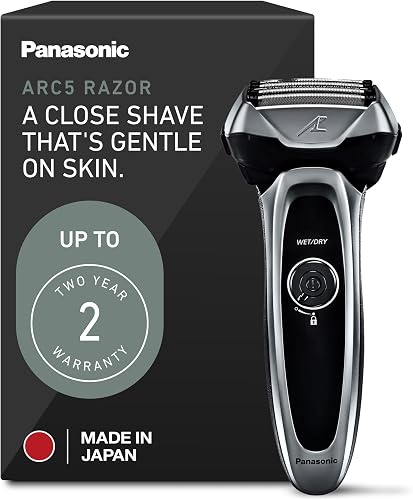
The ARC5 suits someone who wants to remove facial stubble regularly and use a small trimmer for edges. Its five-blade foil system, Multi Flex pivoting head and beard-density sensor support that focused role.
A 10-stage LCD shows battery status, which helps if you prefer planned charging over leaving a shaver on a stand. It charges in 1 hour and includes a travel pouch and universal-voltage AC recharger.
The built-in pop-up trimmer handles mustache and sideburn detail. Choose the Braun instead if separate beard, body and stubble tools would see regular use.
Skip the ARC5 if your main aim is preserving beard length. Its broad shaving head also calls for careful placement when cleaning up small areas beside a shaped beard.
Philips Norelco 7800: for learning a rotary routine
The 7800 suits someone who wants circular shaving with help refining the movement. Philips Norelco says its motion-sensing guidance can improve technique with fewer passes.
Its heads turn 360° and its hair-density sensor adjusts cutting power. Philips Norelco also says the Nano SkinGlide coating improves glide, and describes the shaver as suitable for cutting close on 3-day beards.
Charging takes 1 hour, with a 5-minute quick charge for one shave. A wall adapter is not included, so plan a compatible charging setup before the first use.
Choose it if you will use the movement guidance and prefer rotary coverage. Skip it if you want to keep your existing straight-stroke habit or mainly need a beard-length tool.
Braun Series 7 7032cs: for shaving and trimming
The Series 7 suits someone who alternates between a clean face and other grooming tasks. Its separate beard, body and stubble attachments give it a broader role than facial shaving alone.
The shaving head combines three flexible SensoFoil blades with the 360 Flex system and AutoSense power adjustment. These features suit someone who wants foil passes with head movement around facial contours.
A full 1-hour charge provides 50 minutes of shaving time, while a 5-minute quick charge covers one shave. A charging stand, travel case and cleaning brush are included.
Choose it when the attachments solve tasks you already do. Skip it if you only want clean shaving and would rather avoid swapping and storing extra parts.
How should you set up and learn a new shaver?
Charge it, check the head and map your beard before the first shave. Learn the movement on easy cheek areas before working around the neck and upper lip.
Read the model's directions for head assembly, lubrication and wet use. Check that the cutters and guards are seated correctly, and keep the protective cover somewhere you can find it after shaving.
Trim longer growth first if it exceeds the shaver's recommended range. Feeding long hair into a finishing head can lead to pulling, missed patches and repeated passes.
With foil, use short straight strokes and keep the working surface against your skin as directed. With rotary, make small overlapping circles without grinding into one spot.
Work through one section at a time instead of moving randomly across your face. If you're changing styles, adjust your movement before deciding that the new head needs more pressure.
Keep the routine consistent while you learn, changing one thing at a time. Our guide to using an electric shaver for a closer shave covers stroke direction and contact in more detail.
How much cleaning and upkeep does each style need?
Both styles need hair and residue removed regularly, plus replacement cutting parts when worn or damaged. Choose a shaver you are willing to clean after use, especially if you shave with gel.
For these washable models, follow the manual's opening and rinsing steps. Let the parts dry as directed before closing them for storage, rather than trapping moisture inside a travel case.
Handle foil screens gently and avoid pressing a brush against them unless the instructions allow it. A dented or damaged screen needs attention before another shave.
If you remove individual rotary cutters and guards for deeper cleaning, keep each matched pair together where the manual requires it. Reassemble the head carefully rather than forcing parts into place.
Check replacement-head availability and the correct part number before buying either style. Our guide to cleaning an electric razor explains how to clear buildup without rough handling.
What mistakes make either style shave poorly?
Hard pressure, rushed strokes and repeat passes are common causes of a poor shave. Fix the routine before assuming you bought the wrong head type.
- Using foil in circles: switch to short straight passes so the head works as intended.
- Sweeping rotary heads in long lines: use small overlapping circles to approach changing growth directions.
- Ignoring beard length: trim excess growth before asking a finishing head to remove it.
- Chasing one rough spot: change the approach angle once, then stop if the skin becomes uncomfortable.
- Shaving with buildup in the head: clear trapped hair and dried shaving products before the next session.
- Confusing trimming with shaving: use the appropriate attachment when you want to leave an even length.
Don't compare motor figures from different brands as though they use one shared measure. Cutting speed, blade count and head movement describe different parts of the design.
How do you make the final buying decision?
Choose the motion first, then check the tools and upkeep that fit your week. A shaver earns its place by handling your normal routine, not by having the longest feature list.
Ask how often you shave, where hair is hardest to clear and whether you keep any beard length. Those answers separate a daily facial shaver from a grooming kit with several attachments.
Next, check charging accessories, storage space and replacement-head availability. A missing adapter or unused stand can matter more in daily use than another sensor.
Use the best foil shavers guide and best rotary shavers guide to compare within your chosen style. For broader questions about choosing an electric model, see our complete electric shaver buying guide.
Which should you choose: a foil or rotary shaver?
For your rotary shaver vs foil shaver decision, choose foil if you shave frequently and want controlled passes near beard edges. Choose rotary if circular coverage better suits your neck's changing growth directions.
Among these models, buy the ARC5 for a focused clean-shaving routine, the 7800 for rotary movement guidance, or the Series 7 when its grooming attachments will get regular use. Don't buy extra tools just to leave them in a drawer.
Once you've chosen the movement, use the foil shaver guide or rotary shaver guide to narrow your options by the routine you'll actually keep.
Frequently asked questions
Is a foil or rotary shaver better for sensitive skin?
Neither style is best for every sensitive face. Choose the motion you can control with light pressure, then limit repeat passes over the same patch.
A clean, undamaged head matters in either design. Stop shaving irritated skin, and ask a health professional about irritation that persists.
Which shaver is better for daily shaving?
A foil shaver is a sensible starting point for daily shaving if you want straight, controlled passes over short growth. A rotary can also suit daily use, especially when your neck hair grows in several directions.
Choose the style that clears your beard with fewer comfortable passes.
Can you use a foil or rotary shaver with shaving cream?
Yes, if the exact model supports wet shaving with foam or gel. The Panasonic ARC5, Philips Norelco 7800 and Braun Series 7 7032cs all do.
Use a thin layer so you can guide the head, rinse away residue afterward, and follow the manual's charging and drying instructions.
Which is better for shaving your head?
Choose a shaver intended for scalp use rather than deciding by foil or rotary alone. Handle shape, reach and the intended shaving area matter when working behind your head.
These three models focus on facial shaving, so check their instructions before using one on your scalp.