6 Best Rotary Shavers (October 2026)
The best best rotary shavers include the Philips Norelco 7800 for guided daily shaving, the Philips Norelco i9000 for infrequent close shaving, and the Philips Norelco 3900 for simple shaving routines.
On this page (7 sections)
- Which is the best rotary shaver for your routine?
- How did we compare these rotary shavers?
- How should you choose a rotary shaver for your beard?
- How do you set up and use a rotary shaver?
- Which rotary shaving mistakes should you avoid?
- How do you clean and care for a rotary shaver?
- Which best rotary shaver should you buy?
The Philips Norelco 7800 is the best rotary shaver for most people because it combines shaving guidance, flexible heads and wet or dry use. Choose the 3900 for a simpler routine or the i9000 if closeness is your main priority.
Start with how often you shave and where you leave hair behind. Those details matter more than choosing the largest model number or the fastest sensor.
If you're new to this design, read what a rotary shaver is and who it suits. You can also compare the Philips Norelco 7000 and 9000 if you're choosing between models with added features.
Our picks at a glance
-
1

-
2

-
3

Which is the best rotary shaver for your routine?
The 7800 offers the most useful balance of guidance, shaving flexibility and finishing tools here. The i9000 suits a closeness-focused routine, while the 3900 covers the basics without asking you to use motion feedback.
Choose your shortlist before comparing small technical differences. A shaver that fits your morning routine is more useful than one with features you'll ignore.
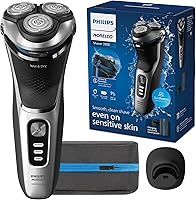
Philips Norelco 7800: best rotary shaver for guided daily use
Philips Norelco 7800
- Flexible heads turn 360 degrees
- Hair-density sensing
- Motion-sensing guidance
- Wet and dry use
Choose the 7800 if you want help with shaving motion plus the choice of dry, gel or foam shaving. Its pop-up trimmer also handles sideburn and mustache edges.
Pros
- Hair sensing adjusts cutting power
- Motion guidance supports technique changes
- Wet use and integrated precision trimmer
Cons
- Wall adapter not included
- Guidance adds little if you won't use it
Choose the 7800 for help with technique if you tend to rush, retrace the same patch or struggle around the jaw. Motion sensing tracks how you shave and provides guidance, while a separate sensor adjusts cutting power to hair density.
Its fully flexible heads turn 360 degrees to follow facial contours. Philips says the Nano SkinGlide coating improves glide, which makes this a sensible option if friction is one reason you want to change shavers.
The practical appeal is having several routine choices in one handle. You can shave dry, use gel or foam, or shave in the shower, then use the pop-up trimmer to tidy sideburns and mustache edges.
A full charge takes 1 hour, and a 5-minute charge provides enough power for 1 shave. Have a compatible wall adapter ready because one isn't included.
Skip it if you'll ignore the guidance and want only straightforward beard removal. The 3900 is a cleaner fit for that brief; choose the i9000 instead if its cutting system and compact heads address your main concern.
Philips Norelco i9000: for closeness after longer gaps
Philips Norelco i9000
- Triple Action Lift & Cut system
- Compact flexible heads
- Adaptive cutting power
- Travel case and charging stand
The i9000 suits buyers who prioritize closeness and sometimes leave several days between shaves. Philips describes its cutting system as suitable for beards up to 7 days long.
Pros
- Compact heads for neck and under-nose access
- Wet or dry use
- Nose trimmer, stand and travel case included
Cons
- Power adapter not included
- Added cutting features are unnecessary for basic beard tidying
Choose the i9000 if you shave less often and want a model designed to handle longer growth. Philips says its Triple Action Lift & Cut system works on beards up to 7 days long.
Its compact flexible heads target access around the neck and under the nose. Hydro SkinGlide coating and a sensor that reads hair density 500 times per second support its focus on glide and automatic power adjustment.
That makes it the most relevant option here when close finishing matters more than keeping the feature set simple. Beard length still varies between people, so trim bulky growth first if the heads struggle to take it in.
The set includes a nose trimmer, charging stand, travel case, cleaning brush and USB-A cable. It supports wet or dry shaving, but you'll need your own power adapter.
Skip it if you mainly maintain a short daily beard shadow and don't need those accessories. Read our Philips Norelco 7200 review if technique guidance matters more to you than the i9000's closeness features.
Philips Norelco 3900: for a simpler morning routine
Philips Norelco 3900
- 5-directional pivoting head
- Rounded ComfortCut blade caps
- Up to 60 minutes cordless use
- Wet and dry use
The 3900 covers everyday shaving, edge touch-ups and rinsing without motion-guidance features. A charging stand and travel pouch help with storage at home and away.
Pros
- Gel, foam and shower shaving supported
- Pop-up trimmer for finishing edges
- Fully washable
Cons
- Power adapter not included
- No motion guidance or automatic density adjustment
Choose the 3900 if you want to shave and move on without motion feedback. Its 5-directional pivoting head follows facial curves, while rounded ComfortCut caps cover blades that cut just above skin level.
That cutting approach makes sense for someone who values a tidy finish without making maximum closeness the whole goal. It doesn't promise irritation-free shaving, so pressure and repeat passes still deserve attention.
You can use gel or foam and shave in the shower. The fully washable design also makes it easier to clear away shaving residue after wet use.
The battery provides up to 60 minutes of cordless shaving after a 1-hour charge. A pop-up trimmer, protective cap, travel pouch and charging stand cover useful everyday tasks, though a power adapter isn't included.
Skip it if you specifically want automatic power adjustment or coaching on your shaving motion. For a fuller look at its strengths and limits, see our Philips Norelco 3900 review.
Philips Norelco 7200: for changing your shaving habits
Philips Norelco 7200

- Flexible heads turn 360 degrees
- Hair-density sensing
- Motion-sensing guidance
- SteelPrecision blades
Choose the 7200 if motion feedback is your main reason for moving beyond a basic rotary shaver. Flexible heads and automatic power adjustment support that guided routine.
Pros
- Feedback on shaving motion
- Nano SkinGlide coating
- Quick charge for a single shave
Cons
- Wall power adapter not included
- Shares core shaving features with the 7300
Choose the 7200 if you want feedback you will act on. It combines motion guidance with automatic power adjustment, making it relevant when you're willing to slow down and change how you move the shaver.
Its sensor reads hair density 250 times per second. The SteelPrecision system has 45 self-sharpening blades, and Philips describes the shaver as suitable for cutting close on 3-day beards.
The useful buying question is how this fits beside the 7800. Both offer guidance and flexible contour contact, but the 7800 is the clearer choice here if confirmed gel, foam and shower use are essential.
The 7200 includes a USB-A charging cable, with the wall adapter supplied separately. Its quick-charge option can rescue a missed charge before a single shave.
Skip it if you already have a comfortable circular technique and won't use the feedback. Also avoid treating its model number as proof of a different shave from the closely matched 7300.
Philips Norelco 7300: for changing beard density
Philips Norelco 7300

- Flexible heads turn 360 degrees
- Hair-density sensing
- Motion-sensing guidance
- SteelPrecision blades
The 7300 suits a beard with denser and lighter patches because it adjusts cutting power as hair density changes. Its core shaving features closely match the 7200.
Pros
- Automatic cutting-power adjustment
- Flexible heads and motion guidance
- Quick charge for a single shave
Cons
- Wall adapter not included
- No clear core-feature advantage over the 7200
Choose the 7300 if automatic power adjustment fits your beard, especially when cheeks are lighter and the chin is denser. Motion guidance adds help with how you move between those areas.
Its core shaving features closely match the 7200: flexible heads, Nano SkinGlide coating and the same SteelPrecision blade count. There is no clear reason to expect a different result simply because the model number is higher.
Philips describes this model as suitable for close shaving on 3-day growth. That makes it relevant for a routine with short gaps between shaves, rather than trimming a grown-out beard.
A full charge takes 1 hour, and the quick-charge option provides a single shave after 5 minutes. A wall adapter isn't included.
Skip it if you already have the 7200 in mind and expect the 7300 to bring a major cutting upgrade. If wet shaving is your deciding requirement, the 7800, 3900, i9000 and 5400 have explicit wet-use support in this comparison.
Philips Norelco 5400: for shower shaving and edge touch-ups
Philips Norelco 5400

- Flexible heads turn 360 degrees
- Automatic hair-density adjustment
- LED display with icons
- Wet and dry use
The 5400 suits a shower-shaving routine with occasional edge touch-ups. Its integrated trimmer and icon display keep those controls on the shaver.
Pros
- Wet use, including in the shower
- Integrated precision trimmer
- Up to 60 minutes cordless use
Cons
- Wall power adapter not included
- No motion-guidance feature
Choose the 5400 for a regular shower-shaving routine if you also want a trimmer built into the handle. Its LED icon display suits buyers who prefer checking information directly on the shaver.
The heads include hair-guiding channels designed to direct hair toward the cutters. Flexible head movement and automatic density adjustment cover the main contour and power needs without adding motion coaching.
This is a useful distinction from the guided models above. You still control the route, pressure and number of passes, so it suits someone who already knows how they prefer to shave.
It provides up to 60 minutes of cordless use and supports wet, dry and shower shaving. A USB-A cable is included, but the wall power adapter isn't.
Skip it if feedback on your technique is the feature you want most. Also compare the 3900 if a simpler washable shaver with a stand and pouch meets your needs just as well.
How did we compare these rotary shavers?
We compared routine fit, contour contact, guidance, charging and accessories, giving the top spot to the most balanced feature set. The scores reflect those buying priorities, rather than a promise that every face will prefer the same shaver.
The 7800 leads because it combines guidance with clear wet-use options and a finishing trimmer. The i9000 follows for buyers focused on closeness and longer gaps between shaves, while the 3900 serves a simpler routine.
The 7200 and 7300 overlap heavily in their core features. Their positions shouldn't suggest a proven gap in shaving results; the useful distinction is whether either meets your needs better than the other options.
| Product | Best for | Head movement | Shaving modes | Charge time | Our score |
|---|---|---|---|---|---|
| Philips Norelco 7800 | guided daily shaving | Fully flexible, 360 degrees | Wet or dry, including with gel or foam | 1 hour; 5-minute quick charge for 1 shave | 8.7 |
| Philips Norelco i9000 | infrequent close shaving | Compact flexible heads | Wet or dry, including in the shower | 1 hour; 5-minute quick charge for 1 shave | 8.3 |
| Philips Norelco 3900 | simple shaving routines | 5-directional pivot | Wet or dry, including with gel or foam | 8.2 | |
| Philips Norelco 7200 | improving shaving technique | Fully flexible, 360 degrees | 1 hour; 5-minute quick charge for 1 shave | 8.1 | |
| Philips Norelco 7300 | uneven beard growth | Fully flexible, 360 degrees | 1 hour; 5-minute quick charge for 1 shave | 7.6 | |
| Philips Norelco 5400 | regular shower shaving | Fully flexible, 360 degrees | Wet, dry or in the shower | 7.4 |
Don't compare cutting-action totals across different blade systems as though they measure finished shave quality. Beard direction, head contact and your technique also affect how much hair remains after a pass.
How should you choose a rotary shaver for your beard?
Choose by growth pattern, shave frequency and the finish you want before comparing extras. Our complete electric shaver buying guide helps if you're still deciding whether a rotary design fits your routine.
Match the head style to how you shave
Rotary heads suit small circular passes across curved areas and hair growing in several directions. A broad circular head can be less convenient close to a sharp beard line, where you need to protect hair you want to keep.
Flexible heads help maintain contact, but pressing harder can stop them moving freely. More head movement is useful only when you let the shaving unit follow your face.
For more context, read how rotary shavers work. Our guide to how a foil shaver works explains a different head design with perforated foil over cutting blades.
Match the shaver to the gap between shaves
Short, regular growth is easier to manage consistently than a beard that has grown long enough to lie flat or bunch together. If you switch between clean shaving and growing a beard, plan for a separate trimming step.
The i9000 is the clearest fit here for longer gaps because Philips specifically describes use on 7-day beards. That doesn't make it a substitute for a beard trimmer when you want to keep an even length.
For dense growth, focus on steady contact and manageable sections. A sensor can adjust power, but it can't correct a head hovering above the skin or hair packed into a dirty cutter.
Decide how much closeness your skin tolerates
Choose a comfortable finish you can repeat, especially if you shave often. A faint shadow can be a better stopping point than repeated passes over skin that is becoming sore.
Coatings and rounded caps are useful design features, but they don't guarantee comfort for every person. If irritation persists, reconsider pressure, preparation and the shaving method instead of assuming a more complex handle will solve it.
Choose guidance only if you'll use it
Motion feedback is most useful when you want to change a habit, such as making wide circles or repeatedly covering the same spot. Treat the guidance as a cue to improve your movement.
Automatic density adjustment serves a different purpose: it changes cutting power as beard density changes. Neither feature removes the need to slow down around the chin, jaw and neck.
Check the exact wet-use permission
Wet shaving, rinsing and shower use are separate permissions worth checking in the instructions. Don't assume that a shaver with flexible heads or a similar model number supports every water-based routine.
If you use gel or foam, choose an option that explicitly allows it. For the 7200 and 7300, confirm the exact model's instructions before planning a shower routine.
Count the extras you'll actually use
A stand helps establish a charging spot, while a case or pouch helps keep the shaver separate from other travel items. Neither should outweigh the fit of the shaving head and your preferred routine.
A nose trimmer handles a different job from an edge trimmer. If you need to straighten sideburns, check for the right finishing tool rather than assuming every included attachment does both.
How do you set up and use a rotary shaver?
Start with a full charge, prepared facial hair and light pressure. Establish one repeatable routine before changing products, shaving direction or preparation.
Set up the charging spot first
Check the charging instructions and use a compatible adapter. Keep the charging area dry, and disconnect the shaver before wet use as directed by its manual.
Place the cable where it won't be pulled into the sink. A quick charge is useful before an occasional rushed shave, but regular charging keeps that rescue step from becoming part of every morning.
Prepare for either dry or wet shaving
For a dry shave, begin with clean, fully dry skin. Give water or sweat time to dry, and avoid a heavy layer of skin-care products before shaving.
For an approved wet shave, soften the beard with warm water and apply a thin layer of compatible gel or foam. Too much foam hides missed patches and adds residue to clear from the head.
Trim long growth before starting if the shaving unit struggles to take it in. A pop-up precision trimmer is useful for edges, but it isn't a practical replacement for a full beard trimmer.
Use small circles and a steady route
Move in small overlapping circles with enough contact for the heads to sit against the skin. Use your free hand to gently flatten loose areas, especially around the neck.
Work through the cheeks, jaw, chin and neck in a clear order. This reduces the chance of forgetting a patch and then repeatedly crossing areas that are already finished.
Change the circle direction where hair grows differently. At the chin or under the nose, use shorter movements so the head stays in contact without pushing into the skin.
Check missed spots before making another pass
Feel for remaining rough patches rather than repeating the whole face. Reposition the head for a missed area, then stop if the skin becomes sore.
Use the precision trimmer for edges after the main shave. Our guide to using an electric shaver for a closer shave covers preparation and pass control in more detail.
Which rotary shaving mistakes should you avoid?
Avoid hard pressure, oversized circles and repeated cleanup passes. These habits can increase friction while leaving the real cause of missed hair unchanged.
Pressing harder is a common response to stubble, but it can prevent the heads from following contours. Ease the pressure and change the angle before going over the same patch again.
Large, fast circles can skim over hollows beside the chin or jaw. Smaller movements give each shaving head a better chance to stay against the skin.
Don't change several parts of your routine at once when solving a problem. Keep the shaver and preparation consistent while adjusting pressure or movement, so you can tell which change helps.
Don't treat an edge trimmer like a shaving head. Keep its cutting edge visible and move slowly near sideburns or a mustache, where a small slip changes the shape.
Finally, avoid chasing blade-razor smoothness through endless passes. Decide when the finish is good enough for your routine, then clean the shaver and leave your skin alone.
How do you clean and care for a rotary shaver?
Remove hair and shaving residue after use, then let cleaned parts dry as the manual directs. Keeping the cutting unit clear helps hair reach the blades and makes it easier to spot wear.
Clean according to the head design
Switch the shaver off before opening or removing the shaving unit. Empty loose hair and use only the rinsing, brushing or cleaning method approved for that model.
Don't assume every part belongs under running water. The 3900 is fully washable, but the charger and other electrical accessories still need their own care instructions.
After gel or foam shaving, clear residue from the shaving unit rather than leaving it to dry inside. Our guide to cleaning an electric razor walks through common cleaning methods.
Keep cutter parts organized
If deep cleaning requires separating cutters and guards, work on one pair at a time unless the manual directs otherwise. Keeping paired parts together avoids unnecessary mix-ups during reassembly.
Handle the thin guards gently and avoid knocking the head against the sink to dislodge hair. A damaged guard needs attention before the next shave.
Dry before storing and watch for wear
Let cleaned parts dry before putting the shaver into a closed case or pouch. Follow the manual for lubrication and replacement rather than adding household oils or cleaners.
Self-sharpening blades still need care and eventual replacement. Philips describes a 2-year blade lifetime for the 3900 and i9000, but cleaning, use and cutter condition remain relevant.
If pulling or missed patches continue after cleaning and charging, inspect the head for damage or worn parts. Replace damaged components instead of compensating with harder pressure.
Which best rotary shaver should you buy?
Buy the 7800 if you want help improving your routine, the i9000 if close finishing after longer gaps matters most, or the 3900 if you want fewer features to manage. Those three cover the clearest buying needs in this group.
Choose the 7200 for motion feedback, and consider the 7300 as a closely matched alternative rather than a major upgrade. Pick the 5400 if shower use, an integrated trimmer and an icon display cover your priorities.
Before ordering, decide whether you need wet shaving, edge trimming or a travel case. Then make sure you have a suitable charging adapter ready, since none of these packages includes one.
Your best rotary shaver should make a comfortable routine easier to repeat. If you're still weighing head styles, use our foil versus rotary shaver guide to make that decision before choosing a model.
Our top 3 picks at a glance
-
1
-
2
-
3
Frequently asked questions
Are rotary shavers good for daily shaving?
Yes, rotary shavers can suit daily shaving, especially when facial hair grows in several directions. Use light pressure and small overlapping circles, then check missed patches by touch.
If repeated passes leave your skin sore, stop chasing a closer finish and adjust your preparation, pressure or shaving frequency.
What is the difference between the Norelco 7800 and 3900?
The 7800 adds hair-density sensing, motion guidance and fully flexible heads, while the 3900 keeps the routine simpler with a pivoting head and ComfortCut blades. Both support wet and dry shaving and include a pop-up trimmer.
Choose the 7800 for guidance or the 3900 if you won't use that feedback.
Can you use a rotary shaver with shaving gel?
Yes, if your exact shaver supports gel use; the Philips Norelco 7800 and 3900 both do. Apply a thin layer so you can keep track of missed areas, and clean away residue afterward.
Wet-use permission doesn't mean every cleaning method or charging arrangement is safe, so follow the model's instructions.
How do you choose between a rotary and foil shaver?
Choose rotary if you prefer circular passes around facial contours; consider foil if you prefer straight strokes and want more control near beard edges. Neither design guarantees a closer or more comfortable result for every face.
Our foil versus rotary comparison explains how those differences affect your routine.